
Language is one of the greatest gifts we give our children. Not just the ability to speak, but the ability to think, to connect, to understand themselves and the world around them. The words children acquire in their earliest years are the building blocks of everything that follows – their ability to learn, to form relationships, to manage their emotions, to make sense of their experiences.
Language development is also one of the areas where parents can make the biggest difference. Research is consistent and clear: the richness of a child’s language environment in the early years has a profound and lasting impact on their vocabulary, communication skills, and academic outcomes. The conversations we have with our children matter enormously.
So what does healthy language development look like? What can parents do to support it? And when should you be concerned? This guide covers everything you need to know.
How Language Develops in the Early Years
Language development begins long before children say their first words. From birth, babies are tuned in to the sounds and rhythms of human speech – turning towards voices, studying faces, responding to tone and expression. The back-and-forth of early communication – a baby coos, a parent responds, the baby responds again – is the foundation on which all later language is built.
By around twelve months, most children say their first recognisable words. By eighteen months, many are combining words into simple phrases. By three, most children are using sentences of several words, can be understood by familiar adults most of the time, and have a vocabulary that is growing rapidly. By the time they start primary school, most children have a working vocabulary of several thousand words and can engage in extended conversations on a wide range of topics.
This is an extraordinary achievement, accomplished largely through exposure and interaction rather than formal instruction. Children learn language by being immersed in it – by hearing it, using it, making mistakes with it, and gradually refining their understanding through thousands of interactions with the people around them.
The Single Most Important Thing You Can Do
If there is one message to take from everything we know about language development, it is this: talk with your child. Not at them – with them.
There is a crucial difference. Talking at children means narrating, instructing, directing. Talking with them means engaging in genuine back-and-forth conversation – asking questions, listening to the answer, responding to what they say, and following their lead. This kind of conversational interaction is the richest language-learning experience available to young children, and it costs nothing.
Talk about what you are doing as you do it – getting dressed, making lunch, walking to the shops. Narrate the world around you. Ask your child what they think, what they notice, what they wonder about. Listen to their answers with genuine interest, even when the answers are rambling, tangential, or entirely about dinosaurs for the fourth consecutive day.
The quantity and quality of language children are exposed to in the early years is one of the strongest predictors of their later vocabulary and reading ability. Every conversation counts.
Reading Aloud: A Habit Worth Protecting
Reading aloud to children is one of the most well-evidenced things parents can do to support language development – and one of the most pleasurable. Children who are read to regularly develop richer vocabularies, stronger comprehension skills, better phonological awareness, and a more positive relationship with books and reading in general.
The benefits are not limited to the language in the books themselves. Reading together creates opportunities for conversation – pointing at pictures, asking questions, making predictions, talking about feelings and experiences that the story brings up. A good picture book is a launchpad for all sorts of rich interaction.
If you can build a daily reading habit from the very earliest age – even just ten to fifteen minutes at bedtime – the cumulative effect over the early years is remarkable. Children who have been read thousands of books by the time they start school arrive with an enormous advantage in terms of vocabulary, comprehension, and love of language.
Songs, Rhymes, and Word Play
Songs and nursery rhymes might seem like simple entertainment, but they are doing serious developmental work. Rhyme and rhythm help children tune in to the sounds within words – a skill called phonological awareness that is one of the strongest predictors of later reading success. Children who know a wide repertoire of nursery rhymes tend to find learning to read significantly easier.
Word play more broadly – puns, silly made-up words, tongue twisters, guessing games – helps children develop flexibility in their thinking about language and builds the metalinguistic awareness that underlies literacy. If your child loves making up nonsense words or laughing at silly rhymes, they are doing exactly what their developing language brain needs.
When to Seek Advice
Language development varies widely between children, and there is a broad range of what is considered typical. However, there are some signs that it is worth seeking advice from a health visitor, GP, or speech and language therapist.
Consider seeking advice if your child is not saying any words by eighteen months; is not combining two words by two years; is difficult to understand for familiar adults by three years; seems to be losing language skills they previously had; or if you have a gut feeling that something is not quite right. Early intervention for speech and language difficulties is significantly more effective than later intervention, so it is always better to seek advice sooner rather than later.
Most health visitors and GPs can refer children to NHS speech and language therapy services if needed. There is no need to wait until a child starts school.
The Role of Early Years Settings
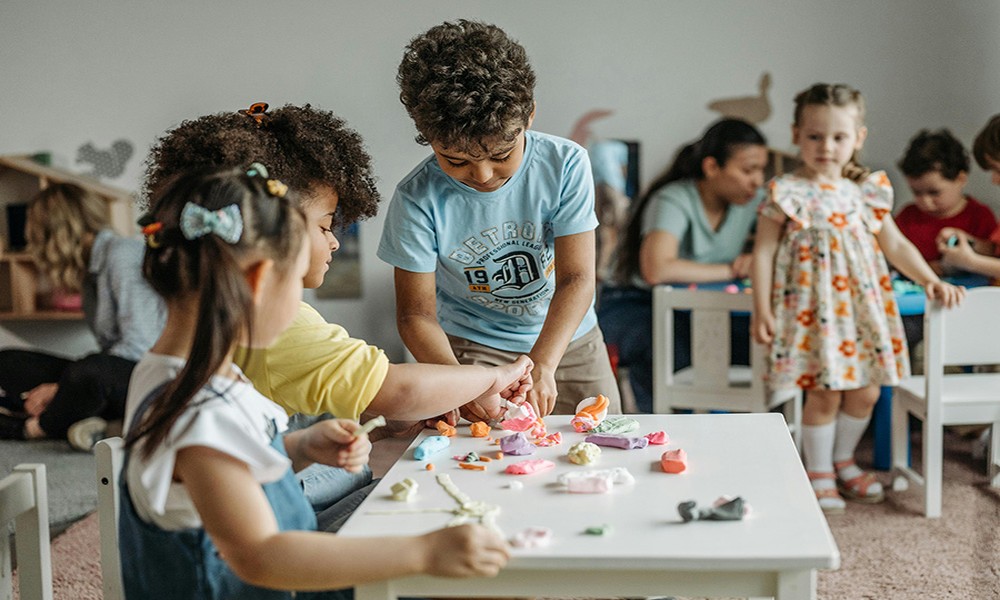
A high-quality early years setting provides children with a language-rich environment that complements and extends what happens at home. Skilled practitioners engage children in sustained, meaningful conversation, introduce new vocabulary in context, share stories and songs, and create opportunities for children to communicate in a wide variety of ways throughout the day.
They also observe children’s language development carefully and are often well placed to notice if a child seems to be struggling – something that is not always easy for parents to see clearly when they are immersed in everyday family life.
Settings like Knightsbridge Kindergarten place communication and language at the heart of their provision, understanding that the gift of language is one of the most important things an early years setting can help nurture.
Talk. Read. Sing. Listen. The investment you make in your child’s language development during these early years will pay dividends for the rest of their life.
