
Category

Education

Category

Young students need strong thinking skills. Third grade is a key development stage. Creative games enhance cognitive power greatly. Children solve problems actively this way. Play makes learning fun and lasting. Critical thinking starts with good play. These fun activities grow minds effectively now. Teachers value these strong educational methods.

Logic Puzzles Teach Deep Analysis

Logic puzzles sharpen young minds effectively. These puzzles require careful observation skill. Students look closely for hidden rules. They must identify repeating sequences quickly. Pattern recognition is highly important work. Simple substitution ciphers are good examples. Sudoku grids challenge numerical placement. Children predict outcomes with precision. They test their initial assumptions first. This mental testing strengthens reasoning ability. Error analysis becomes a valuable tool. Failure provides data for better attempts. Logic builds excellent problem solving habits. Success boosts student confidence naturally. These games prepare minds for future math. Such engagement makes learning stick well. They handle complex issues easily now with the third grade critical thinking activities.

Collaborative Play Requires Teamwork

Team games promote shared mental effort. Students must communicate their ideas clearly. They listen well to others’ suggestions actively. Collaborative story building is highly effective. One child starts the tale simply. Next child adds one meaningful sentence often. Group members build complex narratives together. This develops fluency and imagination greatly. Students learn to compromise immediately. They integrate differing perspectives into one whole. Resources from Mission.io support these efforts. Platform tools aid group organization readily. Children practice verbal reasoning strategies daily. They learn to defend their creative choices well. Team play is crucial life preparation work. Good teamwork solves big problems faster.

Spatial Reasoning Uses Block Play

Spatial reasoning ability is very fundamental. It involves seeing objects in three dimensions. Construction toys are perfect exercises. Blocks help geometry understanding quickly. Students visualize shapes rotations mentally. They plan structures before building begins. Tangram puzzles require keen spatial sense. Players rearrange simple shapes accurately. Goal is fitting parts into specific outlines. This demands precise visual estimation skill. Children manipulate components successfully. They learn about area perimeter concepts early. Such play strengthens internal visual modeling. Good spatial skills help map reading later. These activities bridge imagination and reality. Students improve their focus greatly now. Visual thinking allows creative solutions.

Strategy Games Develop Planning

Strategy board games teach future planning skills. Players must anticipate opponents’ actions well. They consider multiple possible moves deeply. Chess provides excellent strategic training daily. Simplified versions fit third graders’ abilities. Checkers also demands tactical positioning skill. Students learn about cause and effect relationships. Every action has a definite consequence later. They develop patience and thoughtful approach. Mission.io offers digital strategy adaptations too. These digital versions track student progress automatically. Learning requires sustained mental effort often. Good strategy develops long term foresight greatly. Thinking ahead is invaluable skill acquisition. Students become highly adaptable thinkers quickly. Planning secures better outcomes always.

The Evolution of Workplace Safety Standards

In the decades following Singapore’s rapid industrialisation, a pattern emerged that would reshape the nation’s approach to workplace safety. Warehouses expanded across Jurong and Tuas, container terminals multiplied along the coast, and manufacturing facilities transformed the economic landscape. Yet alongside this prosperity came a sobering toll. Industrial accidents, particularly those involving material handling equipment, claimed lives and limbs with troubling regularity. The government’s response would prove decisive, establishing frameworks that now define Singaporean industrial practice.

The forklift course Singapore requires today represents the culmination of hard-won lessons. These regulations did not materialise from abstract policy discussions but from investigations into preventable tragedies, from testimonies of injured workers, and from the recognition that economic progress must not come at the cost of human welfare. The Ministry of Manpower’s stringent certification requirements reflect this historical reckoning.

The Regulatory Architecture: Understanding MOM Requirements

Singapore’s Workplace Safety and Health Act stands as comprehensive legislation governing industrial operations. Within this framework, forklift operation occupies particular attention. The Act mandates that no person shall operate a forklift without proper certification, and employers bear strict liability for ensuring compliance. This is not merely administrative procedure. The law recognises that a forklift, weighing several tonnes and capable of lifting loads to considerable heights, becomes a lethal instrument in untrained hands.

The certification process demands completion of an approved forklift course Singapore training centres offer under MOM supervision. These programmes must meet exacting standards:

  • Theoretical instruction covering forklift mechanics, load dynamics, and stability principles
  • Practical training on multiple forklift classifications
  • Assessment of pre-operation inspection capabilities
  • Demonstration of safe loading and unloading procedures
  • Emergency response and incident management protocols
  • Comprehensive understanding of WSH regulations applicable to forklift operations

The Ministry’s approval process for training providers ensures consistency across the industry. Approved centres undergo regular audits, their instructors must possess both operational expertise and teaching credentials, and their equipment must meet current safety standards. This regulatory vigilance stems from understanding that substandard training creates hazards extending far beyond individual operators.

The Anatomy of Professional Training Programmes

Quality forklift training in Singapore follows a structured progression. Initial classroom sessions establish theoretical foundations. Students learn the physics of load centres and the mathematics of capacity ratings. They study the mechanical systems that power modern forklifts, from internal combustion engines to electric motors and hydraulic systems. This knowledge proves essential when operators encounter equipment malfunctions or must make split-second judgements about load stability.

Practical training forms the programme’s core. Students progress through increasingly complex scenarios:

  • Basic manoeuvring in open spaces
  • Navigation through narrow aisles and confined areas
  • Load pickup from various heights and configurations
  • Stacking operations requiring precision and spatial awareness
  • Ramp operations and uneven surface handling
  • Emergency procedures including controlled equipment shutdown

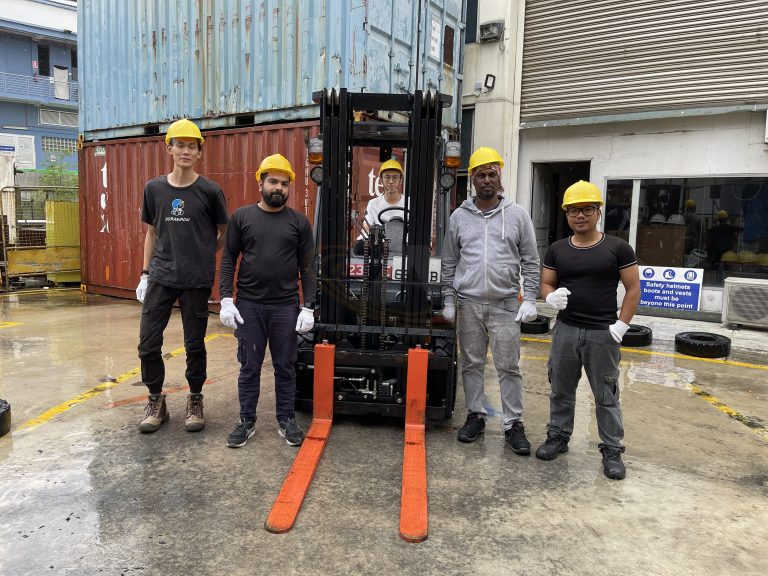
Reputable forklift course Singapore providers replicate actual workplace conditions. Training grounds feature the obstacles operators encounter daily: pedestrian traffic, overhead clearances, loading docks, and storage racks. This realism separates adequate training from excellence.

Economic Imperatives: The Business Case for Certification

For Singaporean enterprises, forklift certification represents sound financial strategy. The costs of non-compliance extend well beyond MOM penalties, though these alone warrant attention. Fines for operating without proper certification can reach thousands of dollars, and serious violations may result in stop-work orders that halt operations entirely.

Insurance considerations prove equally compelling. Underwriters scrutinise operator qualifications when assessing risk and determining premiums. Companies demonstrating rigorous training protocols and perfect safety records secure favourable rates. Conversely, accidents involving uncertified operators often void coverage, leaving businesses exposed to devastating liability.

The productivity benefits of proper training merit consideration. Certified operators handle materials more efficiently, reducing loading times and minimising product damage. They operate equipment within design parameters, extending machinery lifespan and reducing maintenance costs. These advantages accumulate substantially across fiscal years.

Selecting Training Providers: Navigating Singapore’s Options

Singapore’s training landscape includes numerous providers claiming MOM approval. Prospective students must verify credentials carefully. The Ministry maintains public registries of approved training centres, and legitimate providers readily supply their approval numbers and documentation.

Beyond basic approval, quality indicators include:

  • Instructor experience in industrial environments, not merely teaching credentials
  • Modern forklift fleets representing equipment students will operate professionally
  • Training facilities spacious enough for realistic manoeuvring exercises
  • Class sizes permitting individualised instruction and adequate practice time
  • Transparent assessment criteria and pass rates

The investment in comprehensive training extends throughout a worker’s career. Certification opens employment across logistics, manufacturing, construction, and retail sectors. For businesses, maintaining a certified workforce represents competitive advantage in Singapore’s demanding marketplace.

The Path Forward: Safety as Industrial Culture

As Singapore continues developing its advanced manufacturing capabilities and expands its role as regional logistics hub, workplace safety remains paramount. The forklift course Singapore mandates exist not as bureaucratic impediment but as essential safeguard. They protect individual workers, shield businesses from liability, and preserve Singapore’s reputation for operational excellence. In an industry where momentary inattention can prove catastrophic, proper training remains the most reliable defence against trag

Every teen learns in their own method, and finding the correct support can make a meaningful change in how a learner with unique requirements grasps knowledge. A considerate mentor can bring out self-assurance through persistence and a method that suits the kid’s pace. Understanding their emotional needs helps build comfort while learning. The right approach helps children view learning as growth rather than a struggle. It motivates parents and learners to explore supportive guidance and resources, go here to discover more about nurturing a child’s confidence through effective tutoring.

Understanding Individual Learning Patterns

Each student has a special method of captivating knowledge, and children with dyslexia frequently need structured yet flexible direction. Observing how they react to reading and writing tasks helps determine the best approach. Tutors who adapt to the child’s pace make progress steadier. Knowing their preferred technique of learning strengthens engagement and understanding.

Qualities of a Best Instructor

A coach should have concern, endurance, and an understanding of how dyslexia affects learning. They should create lessons that build assurance through positive support. Encouraging curiosity instead of pressure allows natural improvement. Adaptability ensures the sessions remain engaging even during challenging phases.

Customized Teaching for Better Progress

Learning programs should match the child’s strengths rather than highlight their struggles. Custom lessons built around practical examples make reading and writing easier. Simple memory aids help children remember new concepts with comfort. Consistent progress checks support tutors refine lessons to suit changing requirements while maintaining stability.

  • Personalized reading games improve attention and word recognition skills
  • Using visual clues supports understanding of letter and sound patterns
  • Repeating gentle reading exercises builds steady language growth
  • Encouraging storytelling strengthens memory and expression skills

Encouraging Confidence in Every Session

Confidence grows when the child feels supported while learning. Gentle correction rather than harsh feedback keeps motivation alive. Small victories during lessons build faith in their own ability to learn. Tutors who focus on growth rather than errors nurture resilience. The goal is to help them feel proud of each improvement and eager to go here continue learning, which in turn enhances trust between tutor and student.

Collaborating with Family for Success

Families play a main role in supporting learning at home. When parents and instructors keep informed, progress becomes simpler to track. Children feel safe knowing everyone supports their development. Open communication allows the tutor to adjust teaching methods effectively to the child’s home environment and comfort zone.

Building Steady Growth and Self-Belief

As tutoring continues, children develop a steady rhythm of learning that aligns with their comfort level. Over time, their reading and ability improve naturally. Trainers who understand dyslexia attention not only on learning but also on emotional development. This combined focus leads to long-term confidence and curiosity toward learning.

A suitable guide can shape the journey from misperception to clarity. Families who take time to match the instructor with their child’s style encourage stronger growth. Each small achievement builds towards lasting success. Careful observation, open communication, and consistent support transform learning into something positive. By choosing guidance that suits personal needs, children find a path where knowledge grows freely and naturally.

If you are searching for vocal Lessons Singapore, you are joining thousands of aspiring singers, performers, and voice enthusiasts who recognise that proper vocal training can transform not just your singing ability, but your confidence and self-expression. Singapore’s vibrant arts scene and multicultural environment have created a thriving ecosystem for voice education, where students of all ages and skill levels can find expert guidance tailored to their unique needs and aspirations.

Why Vocal Training Matters More Than You Think

The human voice is an instrument unlike any other. It requires no purchase, no maintenance costs, and travels with you wherever you go. Yet it demands perhaps more discipline and understanding than any conventional instrument. Proper vocal training protects your voice from damage whilst unlocking ranges and tones you never knew existed within you.

Many Singaporeans initially approach singing lessons with modest goals, perhaps wanting to sound better at karaoke sessions or church choir. What they discover is far more profound: improved posture, better breathing habits, increased confidence in public speaking, and a deeper connection to their emotional expression. These benefits extend well beyond the recording studio or concert hall.

What to Expect from Professional Vocal Coaching

Quality vocal training in Singapore typically encompasses several core elements:

Breathing technique

Learning diaphragmatic breathing that supports sustained notes and prevents vocal strain

Vocal warm-ups

Essential exercises that prepare your voice and prevent injury

Pitch training

Developing your ear and accuracy for hitting notes correctly

Diction and articulation

Ensuring your words are clear and understood

Performance skills

Building stage presence and overcoming performance anxiety

Music theory basics

Understanding rhythm, melody, and song structure

As one experienced vocal coach in Singapore notes, “The foundation of great singing is not talent alone, but technique. I have seen students with average natural ability surpass those with beautiful voices simply because they committed to proper training and practice.”

Choosing the Right Approach for Your Voice

Singapore offers remarkable diversity in vocal training styles. Classical training focuses on operatic techniques and art songs, emphasising breath control and resonance. Contemporary training addresses pop, rock, jazz, and R&B styles, with attention to microphone technique and modern vocal effects. Musical theatre training combines acting, movement, and singing into an integrated performance skill.

Your choice should align with your goals. If you dream of performing at the Esplanade Concert Hall in classical recitals, seek instructors with conservatory training. If you envision yourself fronting a band at local venues along Clarke Quay or Boat Quay, contemporary vocal coaches with gigging experience will serve you better.

The Singapore Advantage

Singapore’s compact geography means accessibility. Unlike sprawling cities where commuting to lessons becomes a barrier, most residents can reach quality vocal instruction within 30 minutes. The city-state’s emphasis on arts education has cultivated a deep pool of qualified instructors, many holding degrees from prestigious institutions worldwide.

The multicultural fabric of Singapore also creates unique opportunities. Students can explore Mandarin pop ballads, Malay traditional songs, Indian classical music, or Western contemporary styles, often with instructors who understand the linguistic and cultural nuances of each genre.

Investment and Commitment

Vocal Lessons in singapore vary in price, reflecting instructor experience, lesson duration, and location. Group sessions offer affordability and peer learning opportunities, whilst private instruction provides personalised attention and faster progress. Most serious students commit to weekly lessons, understanding that vocal development is gradual and requires consistent practice.

As one student who has been taking voice training in Singapore for three years observes, “The financial investment is modest compared to other hobbies, but the time commitment is significant. You must practice daily, even if just for 20 minutes. The results, however, are permanent. Once you learn proper technique, your voice is forever changed.”

Common Pitfalls to Avoid

Many beginners make predictable mistakes. They push their voices too hard, too soon, risking nodes or chronic hoarseness. They neglect warm-ups, treating their vocal cords like they would treat any other muscle before exercise. They practice incorrect techniques repeatedly, reinforcing bad habits that become difficult to unlearn.

Finding qualified instruction from the start prevents these issues. Look for instructors who ask about your vocal health, who stop you when you are straining, and who emphasise gradual progress over quick results. Legitimate vocal educators understand that building a healthy voice is a marathon, not a sprint.

Beyond the Lesson Room

Modern vocal education in Singapore extends beyond traditional face-to-face instruction. Many teachers now offer online sessions, providing flexibility for busy professionals and students. Recording technology allows for detailed feedback and progress tracking. Some instructors organise recitals and showcases, giving students valuable performance experience in supportive environments.

The social aspect should not be underestimated. Vocal training often connects you with like-minded individuals who share your passion for music. These connections can lead to collaborations, band formations, and lasting friendships built around creative expression.

Taking the First Step

Beginning your vocal journey requires courage. Singing is intensely personal, and allowing someone to hear your untrained voice feels vulnerable. Yet every accomplished singer once stood exactly where you stand now, uncertain but willing to try.

Research potential instructors, read reviews, and do not hesitate to ask questions about their qualifications, teaching philosophy, and experience with students at your level. Many offer trial lessons, allowing you to assess compatibility before committing long-term.

Whether you aspire to professional performance, simply want to sing confidently at gatherings, or seek the therapeutic benefits of musical expression, proper instruction makes all the difference. The investment in yourself through vocal Lessons Singapore will reward you with skills and confidence that enrich your life in countless unexpected ways.

Graduate and professional education needs stable funding. Many students seek help beyond public aid. Private student loans with great options fill this gap for them. These loans offer access when federal aid falls short. They support those who have higher academic goals. Many programs in law medicine and business need higher funds. Private loans provide this extra push. They help students manage fees and other costs. With careful use they can open doors for better careers. The role of these loans has grown with rising education costs. They now stand as a pillar for advanced studies.

Expanding Access to Higher Studies

Private loans expand access to advanced studies. They help students who lack full aid. Some students do not get enough support from grants. They still wish to continue learning. Private loans give that chance. These loans can cover tuition and living costs. They make education reachable for many. Private lenders often support diverse fields. Students then can explore more programs. The loans help build a path toward professional goals. They make sure that ambition does not stop. This access builds a stronger and more skilled society.

Bridging Gaps in Federal Aid

Federal loans sometimes do not cover all costs. Private loans fill this gap in funding. They provide a bridge between need and goal. Many graduate programs charge high tuition. Private loans meet this demand. These loans offer flexible terms for repayment. They can adjust to each borrower’s plan. Students use them to manage all expenses. They keep focus on study and research. Without them some would leave programs halfway. So private lenders play a silent but vital role. They create balance in the education system.

Encouraging Investment in Professional Growth

Private loans help create future leaders. They act as a tool for growth. Many professionals start their careers with such loans. They invest in knowledge and skill now. Later they return this value to society. These loans teach planning and discipline. Students learn to manage costs and time. This experience helps in future careers. It builds confidence to face financial duties. The loan also builds trust with institutions. It gives value to the goal of learning. Thus private loans drive both academic and personal growth.

Conclusion

Private student loans support higher learning. They give students a way to reach career goals. They fill the space where federal aid stops. These loans help create skilled professionals for society. They bring hope to those who dream big. Yet they also need care and good planning. Responsible borrowing keeps education affordable. Guidance from schools and families helps too. The role of private loans remains central today. They continue to shape paths toward success. With wise use they serve education and growth together.

Bangalore is one of the top technology cities in the world. It is home to many software companies, startups, and research centers. From cloud computing to artificial intelligence, the city has always been quick to adopt new technologies. Now, a new and exciting technology is coming: quantum computing. This advanced type of computing could completely change the way we build and use software.

Quantum computing is still new, but many companies and developers in Bangalore are already looking into how it can help. It is expected to make big changes in full stack development. Developers who want to stay ahead in their careers are taking steps to learn about this new field. Many of them are joining full stack developer classes to build a strong base before diving into more advanced areas like quantum computing.

What is Quantum Computing?

Quantum computing is a new type of computing that works differently from the regular computers we use today. Normal computers use bits to store data. Each bit is either a zero or a 1. Quantum computers use something called qubits. A qubit can be 0, 1, or both at the same time. This is called superposition. Because of this, quantum computers can process a lot of data at once.

Another feature of quantum computing is entanglement. This means that qubits can be linked together. A change in one qubit can instantly affect another, even if they are far apart. These features make quantum computers extremely powerful.

Why Does Quantum Computing Matter for Full Stack Developers?

Full stack developers work on both the front-end and back-end of applications. They are responsible for how the app looks and how it works behind the scenes. With quantum computing, developers will be capable to solve problems that are too complicated for current computers. This includes things like data encryption, large-scale simulations, and big data analysis.

Right now, most full stack apps use traditional databases, APIs, and cloud services. But in the future, some parts of these apps may run on quantum computers. Developers will need to understand how to send data to a quantum system, get results back, and use those results in a user-friendly way. This will require new thinking and new skills.

Bangalore’s Role in Quantum Growth

Bangalore is already playing an important role in India’s quantum future. Research labs, universities, and tech companies in the city are starting to work on quantum projects. The Indian government has also launched a national mission on quantum technologies, and Bangalore is one of the key centers.

Several startups in Bangalore are exploring how quantum computing can be used in finance, healthcare, and logistics. These companies need developers who understand both traditional full stack skills and the basics of quantum computing. This is why many tech professionals are enrolling in a full stack course that includes training on upcoming technologies.

Quantum Tools for Developers

Although quantum computing sounds very complex, many tools are being created to help developers. Companies like IBM, Google, and Microsoft are offering cloud-based quantum computers. These let developers write quantum programs and run them from a regular laptop using the internet.

There are also simple programming languages like Qiskit and Cirq made for quantum development. Full stack developers can use APIs to connect quantum systems to their apps. This way, the front-end can remain the same while the back-end does complex calculations using quantum power.

As more tools become available, it will become easier for full stack developers to include quantum features in their apps. Learning how to use these tools early can give developers an edge in the job market.

Real-Life Examples

Quantum computing is still growing, but some early examples already show its power:

  • In healthcare, quantum systems can help design new medicines faster by simulating how molecules behave.

  • In finance, quantum tools can analyze market trends and suggest better investment strategies.

  • In traffic management, quantum models can find faster routes and reduce waiting time.

Imagine a full stack app that helps users find the quickest route to work. With quantum support, this app can consider more data points — like traffic, weather, and road repairs — all at once and give better results than today’s apps.

To build such apps, developers need to combine traditional full stack skills with new knowledge. That’s why many are attending developer classes that cover cloud computing, data handling, and APIs — all of which will be useful when connecting with quantum systems.

Preparing for the Future

Quantum computing will not replace current computers. Instead, it will work alongside them to solve special problems. For this reason, full stack developers will still need to know HTML, CSS, JavaScript, databases, and cloud services. But they will also need to learn when and how to use quantum features.

Courses and training programs are starting to include quantum topics. In a course in Bangalore, students might now be introduced to quantum basics, such as how to write a simple quantum program or how to use quantum APIs.

By starting with regular full stack skills and slowly learning about quantum tools, developers can prepare themselves for the future. The most important step is to keep learning and stay open to new ideas.

Challenges Ahead

Quantum computing has a lot of promise, but it also comes with challenges. First, the technology is still new. Quantum computers are costly and not widely available. Second, it requires a new way of thinking. Traditional programming skills are helpful, but quantum programming has its own rules and logic.

Another challenge is security. With powerful quantum systems, many current encryption methods could become weak. Full stack developers will need to learn new ways to keep user data safe in a quantum world.

These challenges mean that developers must keep learning and practicing. Taking online courses, joining developer communities, and working on small projects can help.

Bangalore: A City of Opportunity

Bangalore has always been a city full of opportunities for tech professionals. With quantum computing on the rise, it will continue to lead in innovation. Companies in Bangalore will need developers who are ready to build the apps of tomorrow — apps that are fast, smart, and maybe even powered by quantum systems.

Whether you are a student just beginning your career or an professional looking to upgrade your skills, this is a good time to invest in learning. Attending a full stack course that teaches modern tools and introduces new technologies can set you on the right path.

Conclusion

Quantum computing is not just science fiction anymore. It is becoming a real part of the tech world, and Bangalore is at the center of this exciting change. Full stack developers will play an important role in making quantum apps user-friendly and useful in everyday life.

To prepare for this future, developers should focus on building strong full stack skills first. Then, they can explore quantum computing step by step. Enrolling in full stack developer classes and staying updated on new trends will help developers build apps that are ready for the future.

The future of quantum computing in Bangalore’s full stack space is bright, and those who start understanding today will be the leaders of tomorrow.


Business Name: ExcelR – Full Stack Developer And Business Analyst Course in Bangalore

Address: 10, 3rd floor, Safeway Plaza, 27th Main Rd, Old Madiwala, Jay Bheema Nagar, 1st Stage, BTM 1st Stage, Bengaluru, Karnataka 560068

Phone: 7353006061

Business Email: [email protected]


Interior design is about arranging furniture and choosing colors. It is about creating functional and beautiful spaces that reflect the style and practicality. Many students who dream of working in this creative field begin by looking for an interior design program. Interior Design Courses offer structured learning that helps students understand design principles and prepare for professional opportunities in the industry.

Understanding the basics of interior design

Students need to learn the fundamentals before diving into specialized areas. Basic courses usually cover design principles, such as:

  • balance
  • harmony
  • contrast
  • proportion

Students study the essentials in creating comfortable and visually appealing interiors, such as:

  • color theory
  • space planning
  • lighting

Learning these basics lays the foundation for more advanced studies.

Types of interior design classes available

There are different paths a student can take depending on their goals and level of commitment.

Certificate courses

These are short-term programs designed to give students an introduction to interior design. They focus on the essentials, such as:

  • drawing
  • computer-aided design (CAD)
  • basic design concepts

They are perfect for beginners who want to explore the field before committing to long-term study.

Diploma programs

These provide more detailed training than certificates. Students gain deeper knowledge in:

  • space planning
  • materials
  • furniture design
  • presentation skills

Diploma courses take one to two years and are ideal for those who want to enter the field quickly with practical skills.

Bachelor’s degree programs

A degree in interior design offers a comprehensive education that includes:

  • theory
  • technical skills
  • creative development

Students study the following:

  • design history
  • sustainable design
  • building codes
  • advanced software

This level of study prepares graduates for professional practice and opens more career opportunities.

Master’s degree and specialized studies

Students who want to specialize in certain areas provide knowledge in the following areas:

  • sustainable design
  • commercial spaces
  • lighting design
  • postgraduate programs

These are suited for those who already have a background in design and want to further refine their skills.

Skills students develop

Interior design courses are not only about creativity. They also require technical and problem-solving skills. Students learn the following specifics:

  • floor plans
  • use design software
  • understand materials
  • finishes

They also build soft skills, such as:

  • communication
  • project management
  • client interaction

These skills are crucial for working with:

  • clients
  • contractors
  • other professionals

Practical experience and projects

Most programs encourage students to apply their knowledge through hands-on projects. These may include designing:

  • mock residential
  • commercial spaces
  • working with real clients
  • creating detailed portfolios

Such experiences prepare students for the realities of professional practice.

Career opportunities in interior design

Students can pursue various career paths after completing their studies. Interior designers work in residential projects, creating homes that are stylish and functional. Others focus on commercial spaces, such as:

  • offices
  • restaurants
  • hotels

Some designers specialize in areas, such as:

  • sustainable design
  • furniture design

The field is diverse, and the opportunities are wide-ranging depending on a student’s interests and skills.

Tips for students interested in interior design

Explore different styles

You may check the different design trends, such as:

  • modern minimalism
  • classic traditional interiors
  • rustic vibe
  • modern-traditional interiors

These can help broaden your understanding.

Practice sketching and drawing

Hand sketching remains a valuable skill for expressing ideas quickly, even in the digital age.

Learn design software

Some programs will help enhance your interior design skills. These programs can help make your skills more enhanced and modern, such as:

  • AutoCAD
  • SketchUp
  • Revit

Build a portfolio

Collect your best work in a portfolio to showcase your creativity and technical abilities.

Stay inspired

Learning different spaces of a home helps you come up with ideas on which design idea suits a particular interior by visiting:

  • showrooms
  • exhibitions
  • architecture sites

Conclusion

Learning interior design is a combination of creativity and technical knowledge. Choosing the right interior design course helps you practice your essential skills and specialties. Students gain hands-on experience to build a strong foundation for a rewarding career.

Preparing for the Strategic Business Reporting (SBR) exam can feel overwhelming. Among the many technical standards, hedge accounting stands out as one of the most challenging areas. Students often struggle with the detail and application, especially when it comes to commodities and derivative contracts. Understanding commodity hedge accounting is not just about memorising the rules, it is about applying International Financial Reporting Standards (IFRS) in context. This post will take you through practical examples, highlight common mistakes, and explain how to approach exam questions with confidence.

Why Hedge Accounting Matters in ACCA SBR

Hedge accounting links financial reporting to real business activity. Companies that use derivatives to manage risk must reflect that strategy in their accounts. The key standard is IFRS 9, which sets out the principles. For students, this is tested through scenario-based questions in the SBR exam. You may be asked to explain the treatment of a derivative contract, show the journal entries, or discuss the impact on profit or loss and other comprehensive income. A firm grasp of the rules will give you an edge when tackling complex case studies.

The Basics of Derivative Accounting

Before exploring a commodity hedge accounting example, you need to understand how derivatives are accounted for. A derivative is a financial instrument whose value depends on the price of something else – such as oil, wheat, or foreign currency. Under IFRS 9, derivatives are recognised on the statement of financial position at fair value, with changes in value usually going through profit or loss. This can create volatility. Hedge accounting provides a way to align accounting results with risk management.

Key points to remember:

  • All derivatives are initially recognised at fair value.
  • Subsequent measurement is also at fair value.
  • Gains and losses are recognised in profit or loss unless hedge accounting is applied.

This framework applies whether the derivative is an interest rate swap, a forward contract, or a commodity future.

Understanding Commodity Hedge Accounting

Commodity hedge accounting applies when an entity uses a derivative to reduce its exposure to commodity price risk. For example, an airline may hedge its exposure to jet fuel prices by entering into oil futures contracts. Without hedge accounting, the gains and losses on the futures would go through profit or loss, creating a mismatch with the actual fuel expense. With hedge accounting, the timing of recognition is aligned, smoothing out volatility.

In the SBR exam, you might be given a scenario involving commodities and asked to apply the rules. This often requires you to distinguish between fair value hedges, cash flow hedges, and hedges of net investments in foreign operations.

Example: Cash Flow Hedge with a Commodity

Imagine a bread manufacturer that expects to purchase 10,000 tonnes of wheat in six months. Wheat prices are volatile, so the company enters into a forward contract to fix the purchase price. This is a classic case for cash flow hedge accounting.

Step 1: Identify the hedged item and hedging instrument

  • Hedged item: the forecast purchase of wheat.
  • Hedging instrument: the forward contract on wheat.

Step 2: Designate the hedge relationship

The company formally documents the relationship at inception, linking the contract to the expected purchase.

Step 3: Measure effectiveness

At each reporting date, the company checks that the hedge is effective. This means changes in the value of the derivative offset changes in the expected cash flows from the purchase.

Step 4: Accounting treatment

  • Effective portion: recognised in other comprehensive income (OCI).
  • Ineffective portion: recognised in profit or loss.
  • When the wheat is purchased, the OCI balance is recycled to the cost of the wheat.

This example shows how hedge accounting prevents volatility from hitting profit or loss until the actual transaction occurs.

Common Errors Students Make

Many students lose marks not because they do not understand the standard, but because they fail to apply it clearly in exam answers. Here are common pitfalls:

  • Not identifying the hedged item and instrument.
  • Forgetting to explain the treatment of the effective and ineffective portions.
  • Ignoring the recycling of OCI when the forecast transaction happens.
  • Confusing cash flow hedges with fair value hedges.

When practising acca exams questions and answers, pay attention to structure. A clear, logical explanation can pick up marks even if the numbers are not perfect.

Linking Commodity Hedges to Derivative Hedge Accounting

Commodity hedges are one application of broader derivative hedge accounting. Other common scenarios involve interest rate swaps or currency forwards. For exam success, focus on the principles. Once you understand the mechanics, you can apply them to any hedging situation.

How This Is Tested in SBR ACCA

The examiner often uses real-world inspired scenarios. You may see a case study of a company exposed to oil, gas, or agricultural commodity prices. Expect to be asked to:

  • Explain the accounting treatment under IFRS 9.
  • Show journal entries.
  • Discuss the impact on profit, OCI, and equity.
  • Comment on disclosures.

Practising with sbr online materials and taking part in an acca revision class can strengthen your confidence.

Practical Steps to Prepare

Here is a practical approach to mastering hedge accounting for exams:

  1. Read the key sections of IFRS 9 relating to hedging.
  2. Practise with real examples such as fuel hedges or wheat contracts.
  3. Attempt past exam questions that include hedge accounting.
  4. Write answers in full sentences, explaining why the treatment applies.
  5. Work with an acca tutor onlineor through online acca tuition if you need guided support.

By building your knowledge step by step, you avoid panic when faced with a hedge accounting scenario in the exam hall.

Commodity Hedge Accounting Example 2: Fair Value Hedge

Suppose a mining company holds an inventory of copper. It fears that prices will fall, so it enters into a futures contract to lock in the selling price. This is an example of a fair value hedge.

  • The inventory is the hedged item.
  • The futures contract is the hedging instrument.
  • Gains and losses on both the instrument and the hedged item are recognised in profit or loss.

The exam may ask you to contrast this with a cash flow hedge. Be ready to highlight the differences.

Commodity Hedge Accounting Example 3: Hedge of a Firm Commitment

Imagine a coffee importer that agrees today to buy beans in three months. The purchase price is fixed in dollars, but the importer’s functional currency is pounds. The company is exposed to both commodity and currency risk. To manage this, it enters into a cross-currency swap. This creates a more complex hedge, which the examiner might use to test deeper understanding. The key is to explain the risk exposure and how the derivative manages it.

How Difficult Is Passing ACCA When Hedge Accounting Appears?

Students often ask how difficult is passing acca when complex topics like hedge accounting are examined. The answer depends on preparation. If you understand the basics of derivatives and practise applying the rules, hedge accounting is manageable. It is not about memorising every detail. It is about showing the examiner that you understand the logic and can apply it. That is how you build exam technique and increase your chances of success.

Staying Motivated During ACCA Exams

Hedge accounting is demanding, and it can drain motivation. Many students benefit from setting small goals, working with an acca private tutor, or joining an acca exams forum to share experiences. To keep going:

  • Break down study sessions into focused blocks.
  • Use past questions as practice.
  • Celebrate progress, even small wins.

Motivation is a key part of exam success, as much as technical knowledge.

Choosing Which ACCA Exams to Take Together

If you are considering which acca exams to take together, pairing SBR with Strategic Business Leader (SBL) can make sense, as both require strong application and written skills. However, balance your workload. Taking too many complex papers at once can increase stress and reduce your chances of passing.

You can read more about courses and structured support through online acca courses uk that are designed to help with planning.

Using Tutors to Strengthen Your Knowledge

Working with the best acca tutors can make a real difference. Tutors can explain difficult topics like derivative accounting, provide structured practice, and guide you on exam technique. You may benefit from face-to-face support through acca tuition near me, or you might prefer the flexibility of an acca online tutor. Either way, targeted tuition helps bridge gaps and build confidence.

For those focused on SBR, enrolling in an acca sbr course is a practical way to get specialist guidance and improve exam readiness.

Final Thoughts

Commodity hedge accounting is one of the more technical areas in the ACCA SBR exam. But with preparation, it is possible to master it. By working through examples, practising questions, and understanding the underlying principles of IFRS 9, you can tackle this topic with confidence. Remember to write clear, structured answers and focus on application, not memorisation. Use all the support available – past questions, online tuition, forums, and tutors – to strengthen your skills. Passing ACCA exams requires both knowledge and strategy, and hedge accounting is an excellent area to demonstrate both.

A noisy classroom can feel impossible sometimes. Students lose focus and teachers get frustrated. So the learning environment suffers and energy drops. Calm classrooms help students learn better. This means students feel safe and ready. Teachers can use clever methods to regain control. Small changes often create big improvements in behavior. Then the day runs smoother with less stress. Every teacher can find ways to boost engagement. Classroom energy can turn positive and productive quickly.

Set Clear Rules and Expectations

Students need clear rules every day. Sometimes they act out because they are unsure. Therefore set rules that are simple and visible. Reward positive actions and correct mistakes gently. Students notice fairness and follow instructions better. This creates respect between teachers and students. Rules should be consistent and easy to remember. Then students stay on task without confusion. Clear guidance prevents many disruptions before they start. A calm classroom comes from order and structure. Teachers see faster results with clear expectations.

Use Teacher Hacks to Increase Focus

Teacher hacks make lessons more engaging. Activities should be short and interactive always. Sometimes a small change in routine works wonders. Therefore switch seating arrangements to boost energy. Group work keeps students busy and motivated. Games and challenges encourage participation and excitement. This keeps hands raised and attention high. Quick brain breaks refresh minds and prevent boredom. Then students return to tasks with renewed energy.

Incorporate Movement and Hands-On Learning

Children need physical movement to stay alert. Sometimes sitting too long causes fidgeting and noise. Therefore plan activities that include walking or hands-on tasks. This keeps energy directed toward learning instead of disruption. Teachers can use materials that students touch and explore. Role-playing lessons make learning fun and memorable. Then students remember concepts better and participate more. Movement reduces stress and increases attention span. Classrooms become active and positive spaces easily. Learning becomes natural and enjoyable for every child.

Build Relationships and Positive Connections

Strong relationships prevent many behavioral problems. Students respond to teachers who care deeply. Sometimes a simple compliment encourages lasting effort. Therefore greet students warmly each morning. Listen to their concerns and value ideas often. This builds trust and respect in the classroom. Students stay motivated when teachers show interest. Then engagement increases and disruptions decrease naturally. Positive connections turn chaos into calm efficiently. Every classroom thrives when students feel understood.

Conclusion: Small Steps Lead to Big Change

Managing a classroom requires patience and creativity. Sometimes small adjustments create huge results quickly. Teachers can use routines, movement, and teacher hacks. Therefore engagement rises and learning improves for everyone. Calm classrooms happen when strategies are simple and clear. Students become responsible and focused on tasks. Then teaching feels easier and more satisfying always. Small changes make lasting differences in behavior. The classroom can become a place of calm energy. Every teacher can apply these methods effectively.


Dialectical Behaviour Therapy (DBT) is one of the most effective, evidence-based approaches for supporting individuals who experience difficulties with emotional regulation, distress tolerance, interpersonal effectiveness, and mindfulness. Originally developed to treat borderline personality disorder, DBT has since been applied to a wide range of mental health challenges including anxiety, depression, eating disorders, and substance misuse.

While DBT skills tools are often taught in a structured, classroom-style format, the real value lies in helping participants take these concepts beyond theory and into everyday life. One of the most effective ways to achieve this is through roleplays.

Why Roleplays Matter in DBT Training

Teaching DBT is not just about delivering information; it is about shaping behaviour and creating real-world applications. Roleplays allow clients to practise skills in a safe, supportive environment before applying them to difficult or high-stress situations outside therapy.

  1. Bridging the Gap Between Theory and Practice

DBT skills can seem abstract when first introduced. Roleplays help make them concrete. For example, practising how to use the DEAR MAN technique for assertive communication is far more impactful when a participant rehearses it in a guided interaction than when it is only explained verbally.

  1. Reducing Anxiety About Real-Life Application

Many clients feel nervous about using new skills in challenging situations. Roleplays provide a rehearsal space where mistakes are not only acceptable but valuable for learning. This reduces fear and builds confidence, making it more likely that clients will use DBT strategies in real life.

  1. Encouraging Active Engagement

Roleplays turn passive learning into active learning. Instead of simply listening, clients participate, problem-solve, and reflect. This interactive process deepens their understanding and improves retention of skills.

  1. Providing Immediate Feedback

During roleplays, therapists can offer direct feedback, highlight strengths, and suggest adjustments. This immediate guidance is essential for reinforcing correct use of skills and correcting misunderstandings.

  1. Building Empathy and Perspective-Taking

By stepping into another person’s role during a roleplay, clients gain insight into how their words and behaviours affect others. This can enhance empathy and support the development of healthier interpersonal relationships.

How to Use Roleplays Effectively in DBT Teaching

  • Start simple: Introduce roleplays gradually with structured scenarios before moving to more complex or emotionally charged situations.
  • Model first: Demonstrate the skill through a roleplay between therapist and co-facilitator or volunteer before asking clients to try.
  • Encourage reflection: After each roleplay, ask participants what felt challenging, what worked well, and what they might do differently next time.
  • Adapt to the group: Ensure that roleplays are culturally sensitive, relevant, and tailored to the needs of participants.
  • Maintain safety: Some scenarios can feel triggering, so it is important to monitor participants closely and keep the environment supportive.

DBT is most effective when clients can move from understanding the skills to confidently applying them in their lives. Roleplays are a crucial teaching tool because they bridge this gap, offering practice, feedback, and confidence-building in a supportive environment. Whether delivered in group sessions or individual therapy, roleplays make DBT skills more practical, memorable, and empowering.