
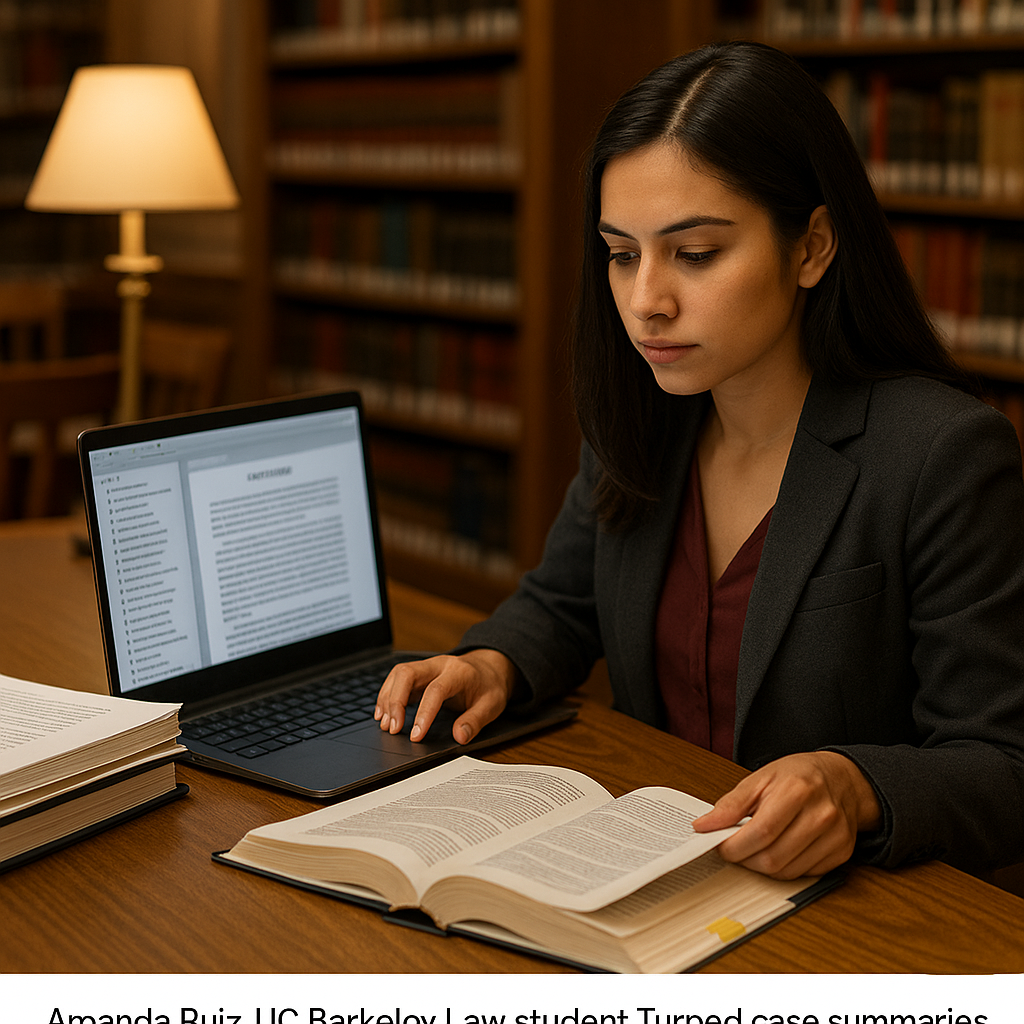
The Problem No One Warns 1L Students About
At Berkeley Law, professors talk endlessly about precedent, logic, and legal reasoning. What they don’t mention is how quickly a student’s laptop becomes buried under dozens of case summaries, judicial opinions, briefing notes, and annotated commentaries. For Amanda Ruiz, a 2L preparing for Moot Court, the digital clutter became its own adversary.
Her folder labeled “Moot Court Materials” looked organized from the outside. Open it, and the illusion disappeared. The directory contained 27 separate PDFs ranging from one-page holdings to 45-page dissents, all downloaded at different times and named in different formats—some by the professor, some by Westlaw, some by students in her section who “helpfully” forwarded documents.
The Assignment With No Mercy
Amanda’s team was responsible for arguing the appellant’s position in a simulated First Amendment case. The panel wanted a clean, single PDF containing:
- All relevant case law
- A chronological table of decisions
- Context summaries
- Her team’s handwritten annotations converted to digital form
The judges weren’t being difficult—they simply didn’t want to flip through 27 attachments. “If you can’t organize your sources,” her professor reminded them, “what confidence should a court have in your argument?”
When Legal Research Turns Into Document Management
Amanda tried, briefly, to compile her notes using Word. The formatting fell apart almost instantly. Headings shifted, citations duplicated themselves, and her neatly scanned annotations appeared at mismatched sizes. She needed structure—not another mess.
That’s when another student mentioned a tool she used during her summer internship. Amanda opened her browser and typed: https://pdfmigo.com
A Different Way to Think About Preparation
Instead of rebuilding her document from scratch, Amanda uploaded every source exactly as it existed: case summaries, full opinions, statutory excerpts, even the PDF of her handwritten margin notes. Seeing them all appear as thumbnails changed everything. The problem wasn’t volume—the problem was arrangement.
She dragged the pages into an order that made sense: earlier decisions first, then modern interpretations, ending with the two landmark opinions her argument relied on. Her annotations were inserted immediately after their corresponding cases. For the first time all semester, her research formed a narrative.
When the structure looked right, she clicked Merge PDF.
The final file—Ruiz_MootCourt_Masterfile.pdf—was clean, chronological, and court-ready.
The Reaction Inside the Moot Court Room
During the team’s oral argument rehearsal, one judge flipped through the masterfile and said, “This is better organized than some real appellate briefs.” Amanda didn’t boast. She didn’t need to. The file spoke for itself—logical, streamlined, readable.
And in a law school environment where clarity is often more valuable than cleverness, that one merged PDF became an edge her whole team relied on.
Why This Approach Matters for Law Students
Legal education rewards students who can interpret complexity, not drown in it. But the administrative burden—unorganized PDFs, inconsistent citations, endless attachments—often obscures the core ideas.
Amanda didn’t merge documents to save time. She merged them to save focus.
And for a profession built on precision, that shift makes all the difference.
