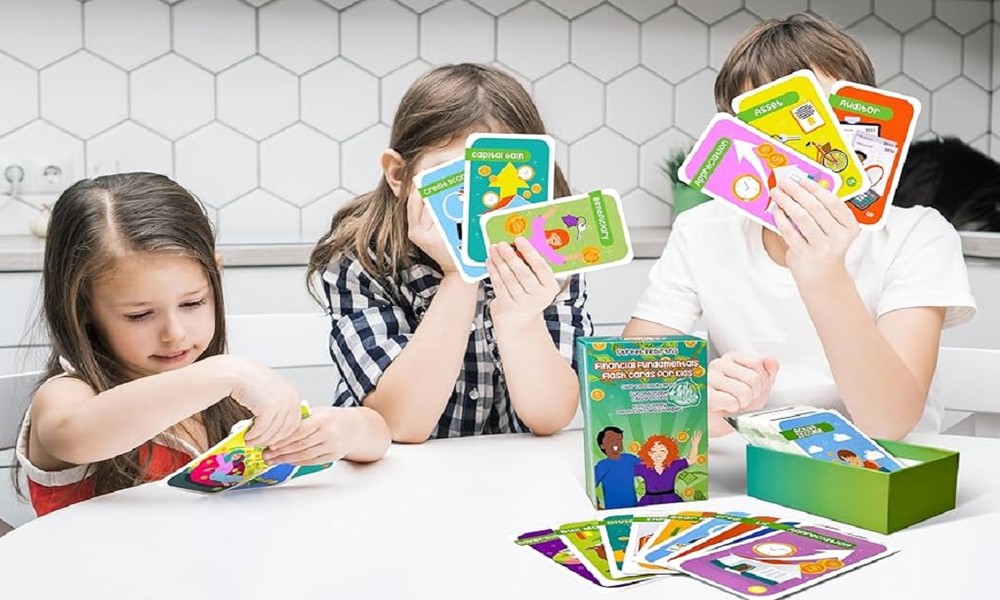
Financial literacy is a critical life skill, yet many students find traditional lessons on budgeting, saving, and investing dry or intimidating. One effective and engaging alternative is using card games as teaching tools.
Card games transform abstract financial concepts into hands-on experiences, helping students learn by doing rather than memorizing definitions.
Why Card Games Work for Financial Education
Card games naturally encourage strategic thinking, decision-making, and risk assessment-skills that closely align with real-world financial behavior. When students draw a card, make a trade, or choose between options, they are practicing the same mental processes used in managing money. Unlike lectures, games provide immediate feedback. A poor decision might lead to losing points or resources, while a smart choice can produce rewards. This cause-and-effect structure helps students quickly grasp the consequences of financial actions.
Another advantage is accessibility. Card games are inexpensive, portable, and easy to adapt for different age groups. Whether in a classroom, after-school program, or workshop, teachers can introduce financial concepts without relying on screens or complex technology.
Key Financial Concepts Taught Through Card Games
Card games can be designed or adapted to teach a wide range of financial topics. Budgeting, for example, can be simulated by giving each player a limited number of cards or tokens representing income. Students must decide how to “spend” their resources while preparing for unexpected events introduced through chance cards. This mirrors real-life budgeting, where planning and flexibility are equally important.
Saving and delayed gratification are also easy to demonstrate. Some games, such as the Monopoly game, reward players who hold onto certain cards instead of using them immediately, showing how patience can lead to greater long-term benefits. Similarly, risk and reward can be illustrated through cards that offer high returns but carry potential losses, helping students understand the basics of investing and speculation.
Encouraging Collaboration and Communication
Many card games involve negotiation, trading, or teamwork. These interactions reflect real financial situations such as business deals, shared expenses, or family budgeting decisions. As students discuss strategies and outcomes, they practice financial vocabulary in a natural context. This strengthens both their understanding of money concepts and their communication skills.
Group play also creates opportunities for reflection. At the end of each round, teachers can lead discussions analyzing which strategies succeeded, which fell short, and the reasons behind them. These conversations help students connect game experiences to real-world financial choices.
Adapting Games for Different Age Levels
For younger students, simply customized card games with colorful visuals and straightforward rules work best. Concepts like earning, spending, and sharing can be introduced using basic mechanics and short play sessions. For middle and high school students, more complex games can incorporate ideas such as credit, interest, insurance, and investing. Teachers can increase difficulty by adding new card types or rule variations as students’ understanding grows.
Customization is key. Educators can modify existing card games or create their own decks to align with curriculum goals. This flexibility allows financial literacy lessons to fit seamlessly into math, social studies, or life skills classes.
Long-Term Impact on Students
Using card games to teach financial literacy does more than make lessons fun-it builds confidence. Students who learn through play are often more willing to take part, ask questions, and experiment with strategies. Over time, this positive exposure reduces anxiety around money topics and encourages responsible financial behavior.
By turning learning into an interactive experience, card games help students develop practical skills they can carry into adulthood. When financial literacy feels approachable and engaging, students are far more likely to remember the lessons and apply them in real life.