Archive

April 2026

Browsing

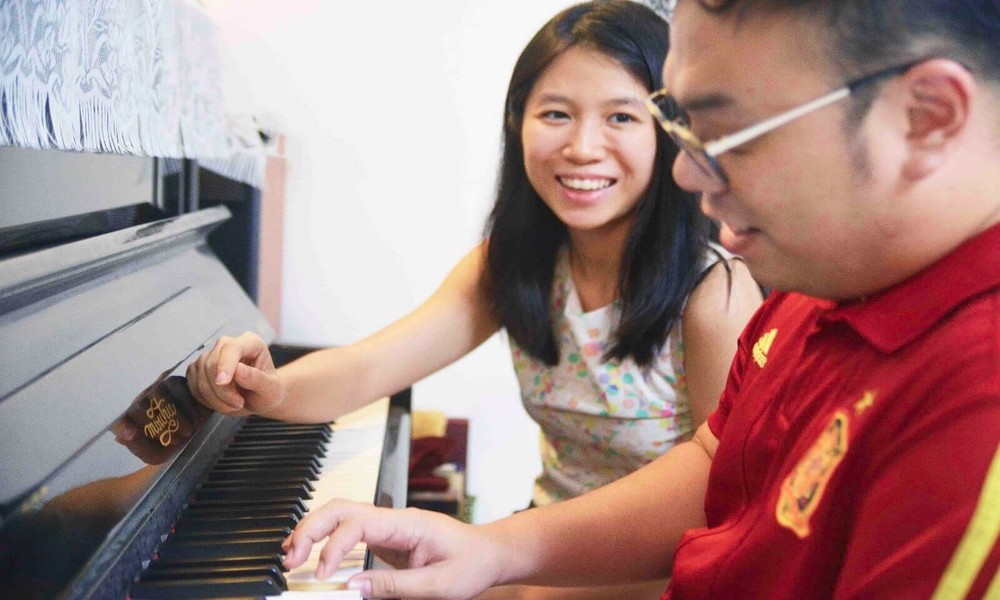
Piano lessons in Singapore serve students at every level, from those pressing keys for the first time to experienced players preparing for diploma examinations. The piano remains one of the most popular instruments on the island, and for good reason. It teaches you music theory, ear training and coordination in a single package. Whether you want to play classical sonatas, jazz standards or pop ballads, a structured lesson plan and a qualified teacher move you forward faster than self-study alone.

What Beginners Learn First

New piano students start with the building blocks that support everything else. Your teacher covers these areas in the opening weeks.

  • Hand position and posture – correct placement prevents strain and builds good habits from day one
  • Reading basic notation – you learn to identify notes on the treble and bass clef
  • Simple scales and finger exercises – these develop dexterity and independence in each finger
  • Rhythm counting – clapping and tapping exercises train your internal sense of timing
  • Short pieces – beginner songs let you apply reading, rhythm and hand position together

Progress at this stage feels fast. Within a month, most beginners can play simple melodies with both hands. The challenge deepens as pieces grow more complex and your teacher introduces dynamics, pedalling and more advanced theory concepts. Sight-reading new pieces also becomes a weekly exercise, encouraging students to trust their ability rather than memorise every note.

How Advanced Students Benefit

Experienced pianists face different challenges. Technique at the advanced level involves nuance rather than novelty. A skilled teacher helps you refine areas that self-practice cannot address.

  • Interpretation – advanced lessons explore how to shape a phrase, balance voices and communicate emotion through your playing
  • Technical precision – fast passages, trills, octave runs and pedal technique demand detailed coaching
  • Repertoire expansion – your teacher introduces pieces outside your comfort zone to broaden your musical vocabulary
  • Exam preparation – students working towards ABRSM, Trinity or diploma grades receive targeted guidance on marking criteria

Advanced students benefit from a teacher who has performed or taught at a high level. Their ear catches subtleties you might miss, and their feedback prevents you from reinforcing habits that limit your playing. Regular feedback from an experienced teacher also keeps you accountable. Without external input, bad habits compound quietly over months and become far harder to correct later.

Finding the Right School in Singapore

Singapore has no shortage of music schools, but quality varies. Compare your options on the following criteria before committing.

  • Teacher qualifications – look for instructors with conservatory training or significant performance credentials
  • Lesson structure – a good school follows a progressive curriculum rather than teaching random pieces each week
  • Instrument quality – lessons on a well-maintained acoustic piano produce better results than sessions on a cheap digital keyboard
  • Trial sessions – reputable schools let you attend a trial lesson before signing a term contract
  • Scheduling flexibility – choose a school that offers evening or weekend slots if you work full time

A school offering piano lessons singapore should match you with a teacher whose experience aligns with your level and goals. Beginners need patience and clarity. Advanced students need precision and challenge.

Practice Strategies That Produce Results

Lessons account for one or two hours each week. Your progress depends on what you do in the remaining days.

  • Set a daily practice schedule – twenty to thirty minutes daily beats a two-hour session once a week
  • Break pieces into sections – practise difficult bars separately before playing the full piece
  • Use a metronome – start slow, nail the rhythm, then increase speed gradually
  • Record yourself – playback reveals timing issues and dynamic imbalances your ears miss in the moment
  • Review old pieces – revisiting earlier material reinforces skills and builds your performance repertoire

As former President S R Nathan once remarked, “Discipline is the bridge between goals and accomplishment.” Piano students who practise with discipline progress faster than those with twice the raw talent but half the consistency.

Group Lessons Versus Private Tuition

Both formats work in Singapore. Private piano lessons give your teacher the chance to focus on your individual weaknesses. Group lessons introduce a social dimension that motivates younger students and adults who enjoy learning alongside others.

  • Private lessons suit exam candidates and students with specific performance goals
  • Group lessons suit beginners who want an affordable introduction to the instrument

Some schools offer ensemble sessions where students play together. These classes build listening skills, timing and the ability to follow other musicians, all valuable for any pianist. Playing in an ensemble also removes the isolation of solo practice, making the learning journey feel more social and sustainable over the long term.

The Long Game

Piano is a long-term commitment. Students who stick with it for two or more years reach a level where playing becomes a genuine source of enjoyment rather than a chore. The early months require patience, but the reward is a skill that stays with you for life. Singapore offers strong teaching talent, good infrastructure and a community of fellow learners. Piano lessons in Singapore give you access to all of these, whether you are sitting down at the keys for the first time or polishing a piece for your next piano lessons singapore.

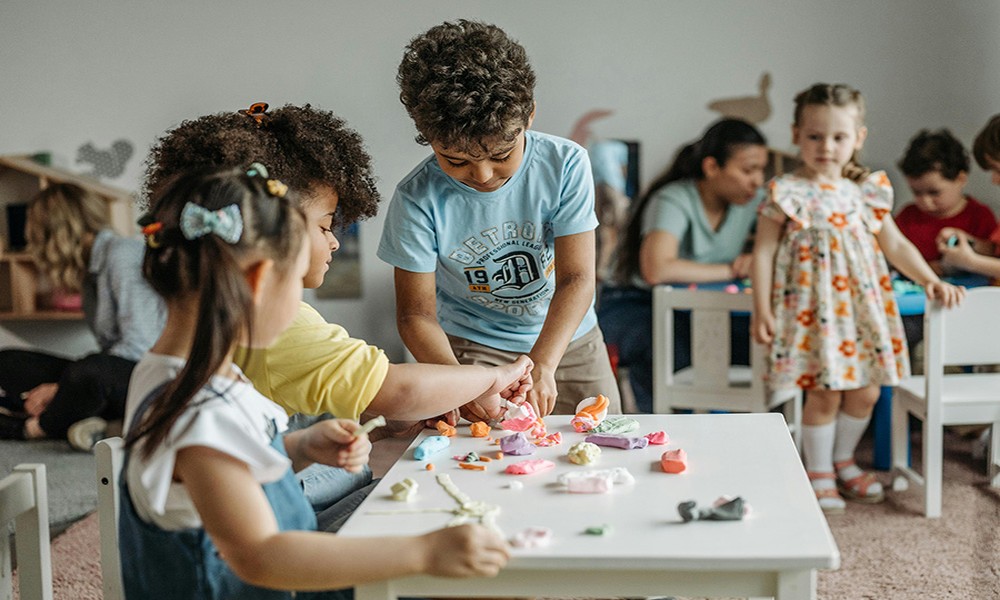
STEM learning builds clear thinking and curiosity. It helps young minds explore real problems. Middle school years are very important for growth. So, learning must be active and meaningful. Students connect lessons with real life situations. These connections improve understanding and confidence.

Hands-On Learning Improves Thinking

Students stay focused with hands-on learning. They learn by undertaking straightforward tasks. This strategy strengthens essential concepts. Students investigate and test solutions. So, kids learn by doing and reflecting. Students learn reasoning from simple experiments. They evaluate outcomes and alter techniques. It develops patience and critical thinking. Teachers advise without answering. Students sometimes find superior answers. Confidence and independent thinking increase.

Problem Solving Through Real Scenarios

Real scenarios help students understand practical challenges. They work on tasks based on everyday problems. This builds reasoning and decision-making skills. Students learn to plan before taking action. Group work improves learning in many ways. Students share ideas and listen carefully. They learn to respect different opinions and views. So, teamwork becomes a strong learning tool.

Programs from Mission.io create engaging mission-based experiences for students. These missions place learners in exciting problem-solving situations. Students must think quickly and act wisely. This builds adaptability and strong decision-making skills.

Technological Integration Improves Learning

Technology aids STEM education in various ways. Student tools match real-world systems. Coding, design, and data basics are taught. These talents equip them for careers. Interactive digital technologies create compelling surroundings. Student ideas can be tested with simulations and models. They grasp complex ideas easily. Learning becomes entertaining and effective. Digital missions from Mission.io imitate space problems. Students address difficulties together throughout missions. This makes learning fun and engaging.

Creativity Drives Innovation Skills

Creativity is important in STEM learning. Students should think beyond simple answers. They explore many ways to solve one problem. This builds flexible and innovative thinking skills. Design activities connect imagination with real ideas. Students create models and simple working prototypes. These tasks improve both creative and logical thinking. Sometimes creative ideas lead to better solutions.

The best stem activities for Middle School support both creativity and logic together. These activities prepare students for complex real-world challenges. They help students grow into confident problem solvers.

Student Collaboration Prepares Them for Future

Collaboration teaches students teamwork. Shared views and careful listening are taught. This fosters peer respect and understanding. Teamwork closely mimics workplaces. Students learn time and task management. They also learn calm dispute resolution. Thus, these talents equip individuals for careers. Mission.io promotes teamwork through mission-based learning. Students collaborate to finish tasks. Teams gain trust and responsibility.

Conclusion

STEM learning prepares students for future challenges. It builds strong thinking and problem-solving skills. Schools should focus on active and meaningful learning methods. These methods support both academic and personal growth. So early STEM learning creates long lasting benefits. It helps students become future ready individuals.

Language is one of the greatest gifts we give our children. Not just the ability to speak, but the ability to think, to connect, to understand themselves and the world around them. The words children acquire in their earliest years are the building blocks of everything that follows – their ability to learn, to form relationships, to manage their emotions, to make sense of their experiences.

Language development is also one of the areas where parents can make the biggest difference. Research is consistent and clear: the richness of a child’s language environment in the early years has a profound and lasting impact on their vocabulary, communication skills, and academic outcomes. The conversations we have with our children matter enormously.

So what does healthy language development look like? What can parents do to support it? And when should you be concerned? This guide covers everything you need to know.

How Language Develops in the Early Years

Language development begins long before children say their first words. From birth, babies are tuned in to the sounds and rhythms of human speech – turning towards voices, studying faces, responding to tone and expression. The back-and-forth of early communication – a baby coos, a parent responds, the baby responds again – is the foundation on which all later language is built.

By around twelve months, most children say their first recognisable words. By eighteen months, many are combining words into simple phrases. By three, most children are using sentences of several words, can be understood by familiar adults most of the time, and have a vocabulary that is growing rapidly. By the time they start primary school, most children have a working vocabulary of several thousand words and can engage in extended conversations on a wide range of topics.

This is an extraordinary achievement, accomplished largely through exposure and interaction rather than formal instruction. Children learn language by being immersed in it – by hearing it, using it, making mistakes with it, and gradually refining their understanding through thousands of interactions with the people around them.

The Single Most Important Thing You Can Do

If there is one message to take from everything we know about language development, it is this: talk with your child. Not at them – with them.

There is a crucial difference. Talking at children means narrating, instructing, directing. Talking with them means engaging in genuine back-and-forth conversation – asking questions, listening to the answer, responding to what they say, and following their lead. This kind of conversational interaction is the richest language-learning experience available to young children, and it costs nothing.

Talk about what you are doing as you do it – getting dressed, making lunch, walking to the shops. Narrate the world around you. Ask your child what they think, what they notice, what they wonder about. Listen to their answers with genuine interest, even when the answers are rambling, tangential, or entirely about dinosaurs for the fourth consecutive day.

The quantity and quality of language children are exposed to in the early years is one of the strongest predictors of their later vocabulary and reading ability. Every conversation counts.

Reading Aloud: A Habit Worth Protecting

Reading aloud to children is one of the most well-evidenced things parents can do to support language development – and one of the most pleasurable. Children who are read to regularly develop richer vocabularies, stronger comprehension skills, better phonological awareness, and a more positive relationship with books and reading in general.

The benefits are not limited to the language in the books themselves. Reading together creates opportunities for conversation – pointing at pictures, asking questions, making predictions, talking about feelings and experiences that the story brings up. A good picture book is a launchpad for all sorts of rich interaction.

If you can build a daily reading habit from the very earliest age – even just ten to fifteen minutes at bedtime – the cumulative effect over the early years is remarkable. Children who have been read thousands of books by the time they start school arrive with an enormous advantage in terms of vocabulary, comprehension, and love of language.

Songs, Rhymes, and Word Play

Songs and nursery rhymes might seem like simple entertainment, but they are doing serious developmental work. Rhyme and rhythm help children tune in to the sounds within words – a skill called phonological awareness that is one of the strongest predictors of later reading success. Children who know a wide repertoire of nursery rhymes tend to find learning to read significantly easier.

Word play more broadly – puns, silly made-up words, tongue twisters, guessing games – helps children develop flexibility in their thinking about language and builds the metalinguistic awareness that underlies literacy. If your child loves making up nonsense words or laughing at silly rhymes, they are doing exactly what their developing language brain needs.

When to Seek Advice

Language development varies widely between children, and there is a broad range of what is considered typical. However, there are some signs that it is worth seeking advice from a health visitor, GP, or speech and language therapist.

Consider seeking advice if your child is not saying any words by eighteen months; is not combining two words by two years; is difficult to understand for familiar adults by three years; seems to be losing language skills they previously had; or if you have a gut feeling that something is not quite right. Early intervention for speech and language difficulties is significantly more effective than later intervention, so it is always better to seek advice sooner rather than later.

Most health visitors and GPs can refer children to NHS speech and language therapy services if needed. There is no need to wait until a child starts school.

The Role of Early Years Settings

A high-quality early years setting provides children with a language-rich environment that complements and extends what happens at home. Skilled practitioners engage children in sustained, meaningful conversation, introduce new vocabulary in context, share stories and songs, and create opportunities for children to communicate in a wide variety of ways throughout the day.

They also observe children’s language development carefully and are often well placed to notice if a child seems to be struggling – something that is not always easy for parents to see clearly when they are immersed in everyday family life.

Settings like Knightsbridge Kindergarten place communication and language at the heart of their provision, understanding that the gift of language is one of the most important things an early years setting can help nurture.

Talk. Read. Sing. Listen. The investment you make in your child’s language development during these early years will pay dividends for the rest of their life.

Coaching is no longer considered as an informal skill. It has turned into a formal discipline in which individuals demand precision, technique, and uniformity. The method is important whether one is leading teams or managing individuals.

This is why formal learning is often studied by many professionals at an early stage, and icf coaching certification singapore is often presented as a reliable alternative due to the strict international standards and systematic progress.

What makes this certification approach different

Such certification is knowledge and application-driven.

Learners usually go through:

• Core coaching frameworks

• Real conversation practice

• Supervised feedback sessions

It is not simply about the knowledge of coaching concepts. It is concerned with their proper use in various contexts.

As an illustration, learners are not only trained to ask questions, but to ask questions that promote deeper thinking and understanding.

How learning builds step by step

Learning process is planned to be gradual.

First, you know the fundamentals of coaching conversations. This is followed by practice in controlled environments. Then you start to use those skills in practice.

This gradual process will enable the learners not to get confused and gain confidence gradually.

And in the majority of situations, such an organized course is more effective than attempting to learn all simultaneously.

Skills that develop during the process

Some of the most important skills start to develop during training:

• Listening without interruption.

• Open ended questions.

• Losing control of conversations.

These are not only skills that can be applied in coaching but also in the daily workplace.

As an illustration, team discussions tend to be more fruitful as communication enhances.

How coaching impacts workplace performance

The skills of coaching are very common in management and leadership.

Individuals who acquire these skills tend to observe:

• Better team engagement

• Clearer communication

• Improved decision making

This is because coaching makes individuals think on their own as opposed to following instructions.

This practice results in more effective cooperation and outcomes in most workplaces.

When the value becomes more visible

At one time, learners start to observe the definite outcomes.

Discussions are more organized. Individuals are more open. Conversations are less coerced.

That is typically the point when icf coaching certification singapore begins to demonstrate its true worth, as the skills are transferred to the practical sphere.

Comparing structured and informal learning approaches

Learning Type

Approach Style

Outcome Focus

Structured Program

Guided and systematic

Consistent skill growth

Informal Learning

Self driven

Uneven development

Mixed Approach

Flexible

Balanced but varied results

This is useful to understand why a structured certification program is favored by many professionals in long term development.

Clarity, consistency and communication are the foundation of coaching. These qualities are developed in a consistent manner through structured learning.

An evident certification route will make sure that learners do not just know about coaching but also implement it in practical scenarios.

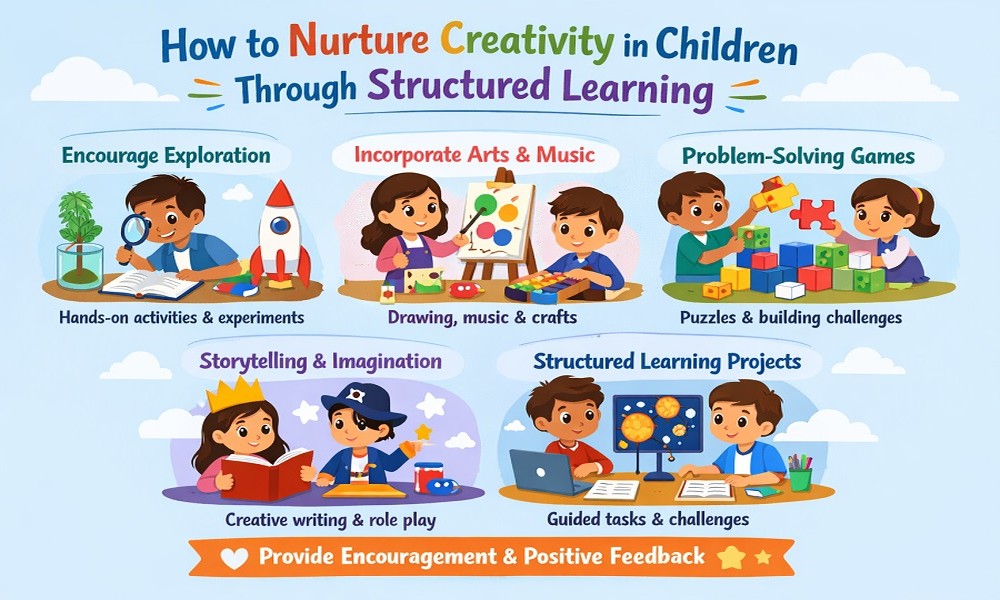
In Singapore’s education system, there is a strong emphasis on academic excellence. While this has many benefits, parents are increasingly recognising the importance of nurturing creativity alongside traditional learning. Creative development helps children think independently, express themselves confidently, and approach problems with a fresh perspective.

Art is one of the most effective ways to encourage this kind of growth. It allows children to explore ideas freely while still developing discipline and focus when guided in the right environment.

Why Creativity Matters in Early Development

Creativity is not just about drawing or painting. It is about how children think, solve problems, and express their ideas. When children engage in creative activities, they learn to experiment without fear of failure.

In Singapore, where structured learning is common, introducing creative activities helps balance a child’s development. It allows them to step away from rigid frameworks and explore their imagination more freely.

Studies and educational practices have shown that creative learning can improve cognitive abilities, communication skills, and emotional intelligence. These are essential qualities that benefit children both in school and in life.

The Role of Structured Learning in Art

While free play is important, structured guidance can significantly enhance a child’s creative journey. A well designed programme introduces techniques, tools, and concepts in a way that builds both skill and confidence.

For example, professional art programmes in Singapore often combine foundational skills such as sketching and composition with creative exploration. This balance helps children understand both the technical and expressive sides of art.

Centres like Little Artists Art Studio focus on developing not just artistic ability but also observation, discipline, and critical thinking, creating a well rounded learning experience.

Benefits of Art Classes for Children

Enrolling children in art classes for kids provides several long term benefits.

Improved Focus and Patience
Art requires attention to detail and time to complete tasks. This helps children develop patience and the ability to concentrate for longer periods.

Confidence Building
When children create something on their own, it gives them a sense of achievement. This builds self confidence and encourages them to take on new challenges.

Better Motor Skills
Activities like drawing, painting, and sculpting help improve hand eye coordination and fine motor skills, especially in younger children.

Emotional Expression
Art provides a safe space for children to express their feelings. This is particularly important in a busy and structured environment like Singapore.

Exposure to Different Art Forms

Modern art education goes beyond basic drawing. Children are introduced to various forms such as painting, clay modelling, and mixed media. This exposure helps them discover their interests and develop unique styles.

Programmes in Singapore often cater to a wide age range, starting from as young as 2.5 years old and progressing to advanced levels for teenagers. This allows children to grow continuously and refine their skills over time.

Learning in a Supportive Environment

A positive learning environment plays a key role in a child’s development. Small class sizes and personalised attention allow instructors to understand each child’s strengths and areas for improvement.

Many structured art programmes focus on guiding children rather than forcing outcomes. This encourages independent thinking while still providing the support needed to improve.

In Singapore, such environments are particularly valuable as they offer a break from academically intense routines and allow children to enjoy the learning process.

Encouraging Creativity at Home

While formal classes are beneficial, creativity should also be encouraged at home. Parents can support their child’s development by providing simple materials such as paper, colours, and craft tools.

Allowing children to explore without strict rules helps build confidence and curiosity. Even small activities like drawing after school or creating simple crafts can make a big difference over time.

Balancing Creativity with Academics

One common concern among parents in Singapore is balancing creative activities with academic responsibilities. The key is to integrate creativity into a child’s routine without overwhelming them.

Short, consistent sessions are often more effective than long, irregular ones. When children enjoy what they are doing, they are more likely to stay engaged and continue learning.

Creative activities should be seen as a complement to academics rather than a distraction. In fact, many skills developed through art, such as focus and problem solving, can enhance academic performance.

Conclusion

Nurturing creativity in children is essential for their overall development. Through a combination of structured learning and free exploration, children can build confidence, improve skills, and discover their unique abilities.

For parents in Singapore, incorporating creative activities into a child’s routine offers a valuable opportunity to support both personal and academic growth. With the right guidance and environment, children can develop not only as students but also as confident and imaginative individuals.