
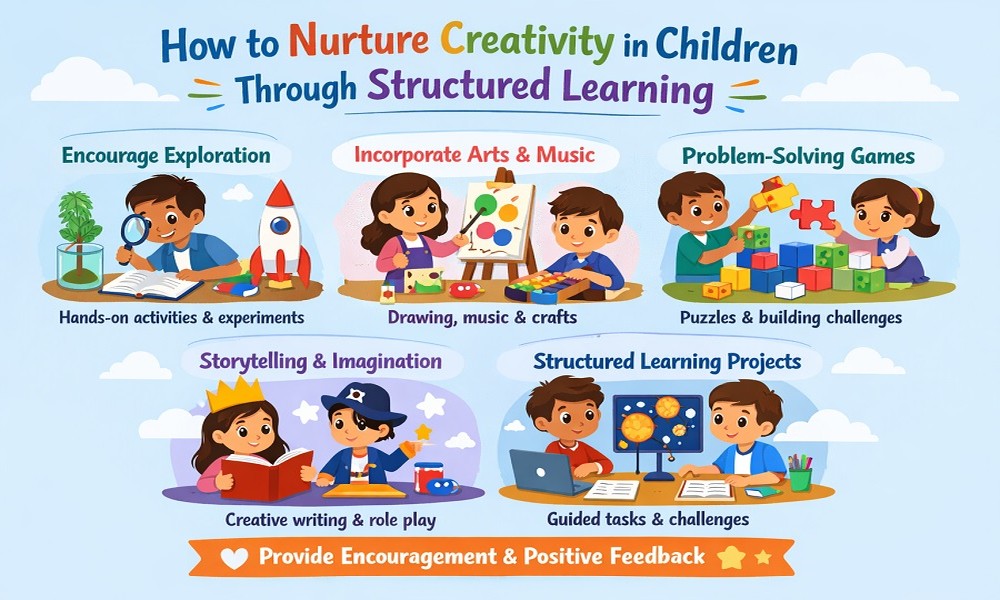
In Singapore’s education system, there is a strong emphasis on academic excellence. While this has many benefits, parents are increasingly recognising the importance of nurturing creativity alongside traditional learning. Creative development helps children think independently, express themselves confidently, and approach problems with a fresh perspective.
Art is one of the most effective ways to encourage this kind of growth. It allows children to explore ideas freely while still developing discipline and focus when guided in the right environment.
Why Creativity Matters in Early Development
Creativity is not just about drawing or painting. It is about how children think, solve problems, and express their ideas. When children engage in creative activities, they learn to experiment without fear of failure.
In Singapore, where structured learning is common, introducing creative activities helps balance a child’s development. It allows them to step away from rigid frameworks and explore their imagination more freely.
Studies and educational practices have shown that creative learning can improve cognitive abilities, communication skills, and emotional intelligence. These are essential qualities that benefit children both in school and in life.
The Role of Structured Learning in Art
While free play is important, structured guidance can significantly enhance a child’s creative journey. A well designed programme introduces techniques, tools, and concepts in a way that builds both skill and confidence.
For example, professional art programmes in Singapore often combine foundational skills such as sketching and composition with creative exploration. This balance helps children understand both the technical and expressive sides of art.
Centres like Little Artists Art Studio focus on developing not just artistic ability but also observation, discipline, and critical thinking, creating a well rounded learning experience.
Benefits of Art Classes for Children
Enrolling children in art classes for kids provides several long term benefits.
Improved Focus and Patience
Art requires attention to detail and time to complete tasks. This helps children develop patience and the ability to concentrate for longer periods.
Confidence Building
When children create something on their own, it gives them a sense of achievement. This builds self confidence and encourages them to take on new challenges.
Better Motor Skills
Activities like drawing, painting, and sculpting help improve hand eye coordination and fine motor skills, especially in younger children.
Emotional Expression
Art provides a safe space for children to express their feelings. This is particularly important in a busy and structured environment like Singapore.
Exposure to Different Art Forms
Modern art education goes beyond basic drawing. Children are introduced to various forms such as painting, clay modelling, and mixed media. This exposure helps them discover their interests and develop unique styles.
Programmes in Singapore often cater to a wide age range, starting from as young as 2.5 years old and progressing to advanced levels for teenagers. This allows children to grow continuously and refine their skills over time.
Learning in a Supportive Environment
A positive learning environment plays a key role in a child’s development. Small class sizes and personalised attention allow instructors to understand each child’s strengths and areas for improvement.
Many structured art programmes focus on guiding children rather than forcing outcomes. This encourages independent thinking while still providing the support needed to improve.
In Singapore, such environments are particularly valuable as they offer a break from academically intense routines and allow children to enjoy the learning process.
Encouraging Creativity at Home
While formal classes are beneficial, creativity should also be encouraged at home. Parents can support their child’s development by providing simple materials such as paper, colours, and craft tools.
Allowing children to explore without strict rules helps build confidence and curiosity. Even small activities like drawing after school or creating simple crafts can make a big difference over time.
Balancing Creativity with Academics
One common concern among parents in Singapore is balancing creative activities with academic responsibilities. The key is to integrate creativity into a child’s routine without overwhelming them.
Short, consistent sessions are often more effective than long, irregular ones. When children enjoy what they are doing, they are more likely to stay engaged and continue learning.
Creative activities should be seen as a complement to academics rather than a distraction. In fact, many skills developed through art, such as focus and problem solving, can enhance academic performance.
Conclusion
Nurturing creativity in children is essential for their overall development. Through a combination of structured learning and free exploration, children can build confidence, improve skills, and discover their unique abilities.
For parents in Singapore, incorporating creative activities into a child’s routine offers a valuable opportunity to support both personal and academic growth. With the right guidance and environment, children can develop not only as students but also as confident and imaginative individuals.
